

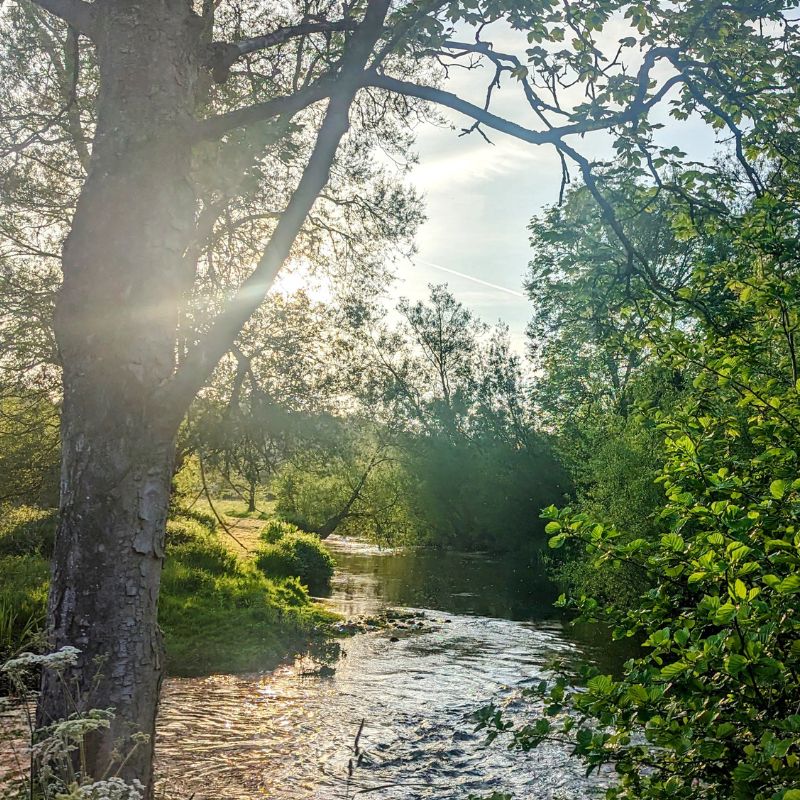
Ask ten people what fly fishing is and you will likely receive ten different answers. Fly fishing in the UK is a unique experience, offering its own traditions and locations that differ from the rest of the world.
For some, it is the image of a trout rising beneath an ancient chalkstream bridge. For others, it is the anticipation of a Scottish salmon taking a fly after hours of patient casting. Some are drawn to the technical challenge of modern nymphing, while others simply enjoy a few peaceful hours away from the pressures of everyday life.
The truth is that fly fishing in the UK is not one sport but many.
Across Britain, anglers pursue everything from wild brown trout and grayling in intimate rivers to stocked rainbow trout on large reservoirs, sea trout in remote valleys, bass along the coastline, and increasingly species such as carp, chub and pike on fly tackle.
It is a pastime rooted in history and tradition, yet one that continues to evolve through innovation, new techniques and a younger generation of anglers constantly pushing boundaries.
It can be deeply social or wonderfully solitary. It can be highly technical or beautifully simple. Some anglers dedicate their lives to a single river, while others travel the country in search of new waters and new experiences.
This article explores the modern fly-fishing scene in the UK, the waters, species, traditions, opportunities and communities that make it one of Britain’s most rewarding outdoor pursuits.
What Fly Fishing Means Today
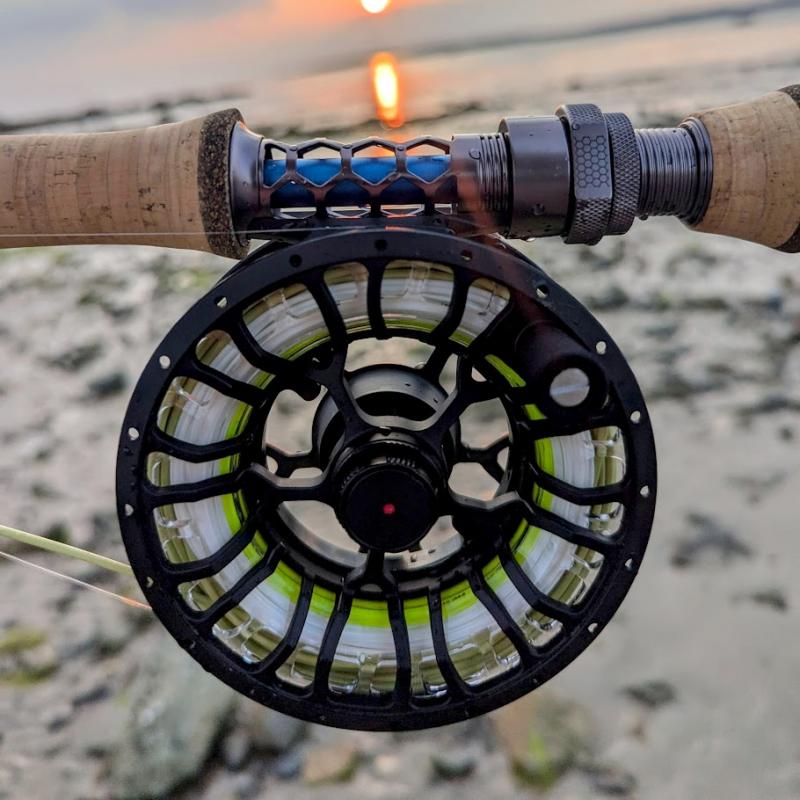
Fly fishing uses a specialised rod, reel and weighted fly line to cast lightweight artificial flies.
Those flies may imitate insects, shrimp, small fish, terrestrial creatures or other food items. The aim is to present the fly in a way that convinces a fish to take it.
But fly fishing is not only about the method.
It is also about observation, patience, timing, movement, weather, water, wildlife and judgement. It asks the angler to slow down and pay attention.
That is one of the reasons it has such lasting appeal.
Why People Are Drawn to Fly Fishing
People come to fly fishing for many reasons.
Some enjoy the technical challenge. Some enjoy the peace. Some enjoy the wildlife. Some enjoy the history. Some simply want a reason to spend more time outdoors.
Recent programmes featuring Bob Mortimer and Paul Whitehouse helped introduce fishing to a wider audience by showing its humour, friendship and emotional value. Many viewers saw that fishing is not just about catching fish. It can also be about slowing down, talking, laughing, reflecting and spending time in beautiful places.
For many anglers, fly fishing offers:
- Time away from screens and work pressure
- A reason to spend time outdoors
- Physical activity without excessive strain
- Continuous learning
- Moments of quiet focus
- Friendship and community
- A connection with rivers, lakes and wildlife
At its best, fly fishing gives you space to breathe.
The Social Side of Fly Fishing
One of the great strengths of fly fishing is that it can be exactly as social – or as solitary – as you want it to be.
Some anglers cherish the opportunity to spend a few peaceful hours alone beside a river, away from the pressures of work, screens and daily life. The quiet concentration required to spot fish, read the water and make accurate casts can be wonderfully absorbing and is one of the reasons many people find fly fishing so relaxing.
Others enjoy being part of a thriving community of like-minded adults. Across the UK there are countless fly-fishing clubs, casting groups, fisheries, social gatherings, events and informal networks where anglers share knowledge, stories and experience.
A typical day on the water might involve meeting new fishing partners, learning a technique from a more experienced angler, discussing flies over lunch or simply enjoying good company in beautiful surroundings.
There is no right or wrong way to enjoy the sport.
Some anglers spend most of their time fishing alone. Others rarely fish without friends. Many enjoy a mixture of both.
The choice is entirely yours.
What often surprises newcomers is how welcoming the fly-fishing community can be. While the sport has deep traditions, most anglers are happy to share advice, celebrate successes and help beginners take their first steps.
Whether you are looking for peaceful solitude, new friendships or something in between, fly fishing offers opportunities for both.
River Fly Fishing in the UK
For many anglers, river fishing represents the traditional heart of fly fishing in Britain.
The UK has a remarkable range of rivers, from tiny upland streams to broad salmon rivers and famous chalkstreams. Each has its own character, rhythm and challenges.
River fly fishing in the UK is most closely associated with:
- Wild brown trout
- Grayling
- Atlantic salmon
- Sea trout
Understanding a river can take years. That is part of the appeal.
Wild Brown Trout
Wild brown trout are central to the story of British fly fishing.
They live in rivers, streams, burns and becks throughout the UK, from remote Scottish hill streams to limestone rivers in Derbyshire and rain fed rivers of Yorkshire.
Unlike stocked fish, wild trout gow naturally in the river and survive through instinct, caution and adaptation.
Fishing for wild trout rewards observation. The angler must learn where fish hold, when insects hatch, how water levels change and how weather affects feeding behaviour.
A single wild trout from a small stream can be every bit as satisfying as a larger fish from more famous water.
Grayling
Grayling are among the most elegant fish found in British rivers.
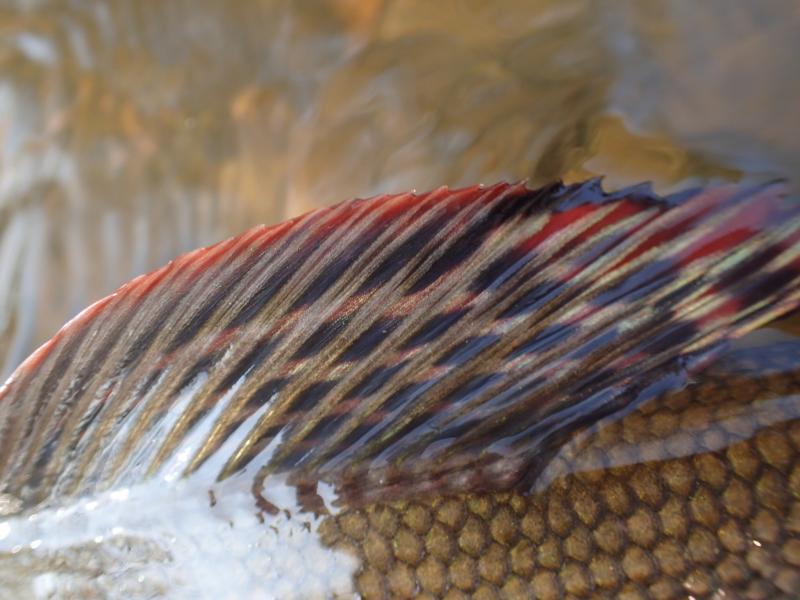
Often called the “Lady of the Stream”, they are especially valued because they offer excellent sport during autumn and winter, when many trout seasons have closed.
Grayling fishing has also become strongly associated with modern nymphing techniques. These methods have brought new energy into river fishing and attracted many younger anglers who enjoy the technical challenge.
For many fly fishers, grayling are now one of the most exciting freshwater species in the UK.
Atlantic Salmon
Scottish salmon fishing is known throughout the world.
Rivers such as the Tay, Spey, Dee, Tweed and Findhorn have attracted anglers for generations.
Salmon fishing is not easy and success is never guaranteed. A fish may take on the first cast or after several days of effort. That uncertainty is part of its character.
For many anglers, salmon fishing is as much about place, tradition and anticipation as it is about numbers of fish caught. There are less, but still notable salmon fishing in England & Wales too.
Sea Trout
Sea trout are migratory brown trout that spend part of their lives feeding at sea before returning to freshwater rivers.
They are powerful, unpredictable and often pursued during summer evenings and into darkness.
Sea trout fishing has a unique atmosphere. The river changes as light fades. Sounds become sharper. The angler waits for the sudden pull of a fish moving through the pool.
For experienced anglers, few branches of fly fishing are more exciting.
Chalkstreams: A Special Part of British Fly Fishing
Chalkstreams are among the most famous and important rivers in British fly fishing.
These rivers are fed by underground aquifers, with water filtered naturally through chalk geology. This often creates clear water, stable flows, rich weed growth and abundant aquatic insect life.
Famous chalkstreams include:
- River Test
- River Itchen
- River Avon
- River Kennet
- River Wylye
Chalkstreams played a major role in the development of modern dry-fly fishing and remain deeply associated with the history of the sport.
They are also precious habitats. Their ecological importance goes far beyond angling, and their protection matters for future generations.
Rain-Fed Rivers
Not all great fly fishing takes place on chalkstreams.
Many of Britain’s most loved rivers are rain-fed systems. These rivers rise and fall with weather conditions and can change dramatically throughout the season.
Rain-fed rivers are found across areas such as:
- Derbyshire
- Yorkshire
- Lancashire
- Cumbria
- Wales
- Scotland
They often provide varied, challenging and rewarding fishing for wild trout, grayling, salmon and sea trout.
Learning to read changing water levels, colour and temperature is part of what makes these rivers so absorbing.
Stillwater Fly Fishing
Stillwater fly fishing is another major part of the UK scene.
It includes reservoirs, lakes, lochs, ponds and managed fisheries. For many people, stillwaters provide the first step into fly fishing because they are accessible, well managed and often beginner-friendly.
Common stillwater species include:
- Rainbow trout
- Brown trout
- Tiger trout
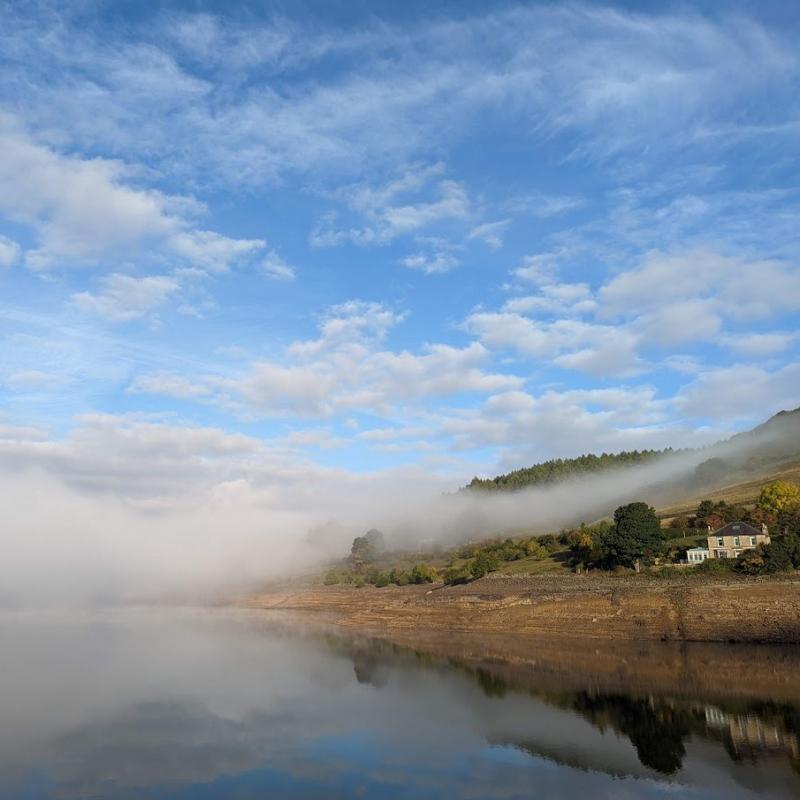
Large reservoirs such as Ladybower, Rutland, Grafham and Chew have become important names in British fly fishing.
Stillwater fishing can be simple and relaxed, but at the highest level it is also highly technical, involving detailed knowledge of depth, wind, feeding patterns, fly choice and retrieve speed.
Stocked Rainbow Trout
Stocked rainbow trout have played an important role in making fly fishing accessible across the UK.
Although rainbow trout are not native to Britain, they provide exciting sport and allow newcomers to develop confidence with casting, fly choice and playing fish.
Many anglers caught their first fly-caught fish at a stocked trout fishery.
That first fish often becomes the start of a lifelong interest.
Pike Fly Fishing
Pike fly fishing has grown significantly in popularity.
It is bold, visual and exciting. Large flies, powerful takes and strong fish create a very different experience from traditional trout fishing.
Pike can be targeted in rivers, canals, lakes and reservoirs.
This branch of fly fishing requires suitable tackle, wire traces and careful fish handling, but it has opened the sport to anglers who enjoy predator fishing and larger flies.
Carp Fly Fishing
Carp on the fly has become one of the most interesting modern developments in UK fly fishing.
It often involves stalking visible fish in clear, shallow water and presenting a fly with care.
Carp can be wary, powerful and surprisingly challenging on fly tackle.
Many younger anglers have embraced carp fly fishing because it combines observation, stealth and experimentation.
Coarse Fish on the Fly
Coarse fish on the fly should be seen as its own branch of the sport.
It is separate from traditional trout and grayling river fishing, but it is becoming an increasingly important part of the modern UK fly-fishing scene.
Anglers now target species such as:
- Chub
- Perch
- Roach
- Rudd
- Barbel
This approach has helped broaden the sport and challenge old assumptions about what fly fishing can be.
It is also part of the reason younger anglers are helping move fly fishing forward.
Saltwater Fly Fishing
Saltwater fly fishing is one of the most dynamic areas of fly fishing in the UK.
The British coastline offers opportunities for species such as:
- Bass
- Mullet
- Pollack
- Mackerel
- Garfish
Saltwater fly fishing involves tides, wind, movement, weather and often plenty of walking.
It feels different from river or stillwater trout fishing, but it shares the same core skills of observation, casting and presentation.
Fly Tying: Creativity Away from the Water
For many anglers, fly tying becomes a hobby within a hobby.
Sitting at a vice and creating your own flies adds another layer of understanding to fly fishing.
Fly tying combines:
- Craftsmanship
- Creativity
- Observation
- Problem-solving
- Tradition
It is especially enjoyable during winter, when fishing opportunities may be more limited.
There is also something deeply satisfying about catching a fish on a fly you have tied yourself.
Clubs, Guides, Lessons and Day Tickets
Access to fly fishing in the UK is usually managed through clubs, day tickets, fisheries, hotels, estates, syndicates and guiding services.
For newcomers, this can seem confusing at first, but it is usually straightforward once explained.
Fly Fishing Clubs
Clubs are an important part of British fly fishing.
They often provide access to rivers and stillwaters, as well as social events, conservation work and shared knowledge.
Joining a club can be one of the best ways to meet other anglers and learn more about local waters.
Guides and Lessons
Professional guides and instructors can make the early stages of fly fishing much easier.
A good lesson can help with casting, safety, equipment, fly choice and understanding where fish are likely to be found.
Beginners often progress far more quickly with good instruction than they do trying to work everything out alone.
We provide guiding and lessons in the Derbyshire Peak District.
Day Tickets
Many fisheries and some rivers offer day-ticket access.
This allows anglers to fish without committing to a full club membership or syndicate.
Day tickets are often a practical way to explore different venues and discover what kind of fly fishing you enjoy most.
Fly Fishing Hotels and Fishing Holidays
Fly fishing also sits naturally alongside travel and short breaks.
Across the UK, there are hotels, lodges and estates that cater for anglers.
Popular areas for fishing holidays include:
- Scottish Highlands
- River Tweed valley
- Peak District
- Yorkshire Dales
- Lake District
- Welsh river valleys
- Southern chalkstreams
For many anglers, a fishing trip is not only about the fishing. It is about landscapes, food, company, local history and time away from normal routines.
Buying Fly Fishing Gear
Fly fishing tackle can seem complicated at first, but beginners do not need everything at once.
A simple, well-balanced outfit is far better than a collection of unsuitable equipment.
A common beginner setup might include:
- A fly rod
- A matching reel
- A suitable fly line
- Leaders and tippet
- A small selection of flies
- Polarised glasses
- A landing net
For many UK trout situations, a 9ft #5 or #6 rod with a floating line is a very versatile starting point.
However, the best choice depends on where you fish, what species you are targeting and how you want to fish.
This is where specialist advice makes a real difference, contact us for help with this.
Rod Licences and Permission to Fish
In England and Wales, most freshwater fishing requires a valid Environment Agency rod licence.
A rod licence does not give you automatic permission to fish any water. It simply covers the legal licence requirement.
You will usually also need permission through one of the following:
- Day ticket
- Club membership
- Fishery ticket
- Syndicate membership
- Estate booking
Rules can differ between England, Wales, Scotland and Northern Ireland, so anglers should always check current local requirements before fishing.
Tradition and History in UK Fly Fishing
Fly fishing in Britain has a long and important history.
The sport has been shaped by generations of anglers, writers, fly dressers, river keepers and tackle makers.
Traditional dry-fly fishing, wet-fly fishing, salmon fishing and fly tying all have deep roots in British angling culture.
Respecting that history matters.
The great anglers of the past gave us techniques, patterns, ideas and standards that still influence the sport today.
Understanding that heritage helps modern anglers appreciate the waters they fish and the methods they use.
Young Anglers and the Future of the Sport
Fly fishing has an older average age profile than many sports, but that is not the whole story.
There is also a highly active subculture of younger anglers who are pushing boundaries and taking fly fishing forward.
They are experimenting with:
- Modern nymphing techniques
- Streamer fishing
- Saltwater fly fishing
- Carp on the fly
- Coarse fish on fly tackle
- New fly patterns
- Digital education and social media
This should be welcomed.
Tradition and innovation do not need to be in conflict.
There is room for the angler fishing a classic dry fly on a chalkstream and the angler exploring modern nymphing techniques on a freestone river.
There is room for salmon fishing, small-stream trout fishing, reservoir fishing, pike fishing and saltwater fly fishing.
A healthy future for fly fishing needs both respect for the past and openness to new ideas.
Getting Started Without Feeling Intimidated
Fly fishing can look complicated from the outside.
The language, tackle, casts, flies and access arrangements can all feel unfamiliar at first.
But nobody begins as an expert.
The best way to start is to keep things simple.
- Speak to a specialist tackle shop
- Book a beginner lesson
- Start on suitable water
- Use simple equipment
- Ask questions
- Enjoy learning gradually
Do not be afraid of getting things wrong.
Every experienced angler has tangled leaders, missed fish, chosen the wrong fly and made poor casts.
That is part of the process.
The important thing is to enjoy learning.
Final Thoughts
Fly fishing in the UK is rich, varied and constantly evolving.
It includes wild trout streams, famous chalkstreams, rain-fed rivers, reservoirs, salmon beats, sea trout rivers, saltwater marks, pike waters, carp venues, fly tying benches, clubs, guides, lessons and friendships.
It can be peaceful and solitary. It can also be social and full of camaraderie.
It can connect you with tradition, but it can also introduce you to some of the most innovative and forward-thinking anglers in modern sport.
Most importantly, fly fishing gives people a reason to spend time outside, slow down, learn something new and enjoy the natural world.
If you are curious about getting started, speak to specialists, ask questions and take your first step without pressure.
There is no single correct way to enjoy fly fishing.
The choice is yours.