Looking Beyond the Marketing
Every year brings a fresh wave of tackle launches promising longer casts, stronger drags and more fish in the net. Among this year’s standouts, sage fly fishing continues to impress with innovative solutions. Most offer incremental improvements, but occasionally a few developments stand out because they genuinely solve problems anglers face every day.
The recent Far Bank 2026 launch showcased several new products from Sage and Rio, but more importantly it highlighted a shift towards designing equipment around real-world fishing situations rather than simply chasing specifications.
Here are five developments that caught our attention.
1. ESP Tippet – A Different Approach to Sensitivity
For years anglers have largely chosen between nylon and fluorocarbon. Rio’s new ESP tippet sits somewhere between the two.
What makes it particularly interesting is the remarkably low stretch. During testing, ESP showed roughly one-third of the elongation found in traditional fluorocarbon.
Why does this matter?
When fishing buzzers on stillwaters, tight-line nymphs on rivers, or any method where takes can be subtle, less stretch means better contact with the fly. Those faint plucks, hesitations and tiny movements that can easily go unnoticed become much easier to detect.
For anglers who enjoy technical river fishing or modern nymphing methods, this could prove to be one of the most significant developments in recent years.
2. Sage R8 Power – Fast Without Feeling Brutal
Many anglers associate fast-action rods with power, but also with demanding casting styles.
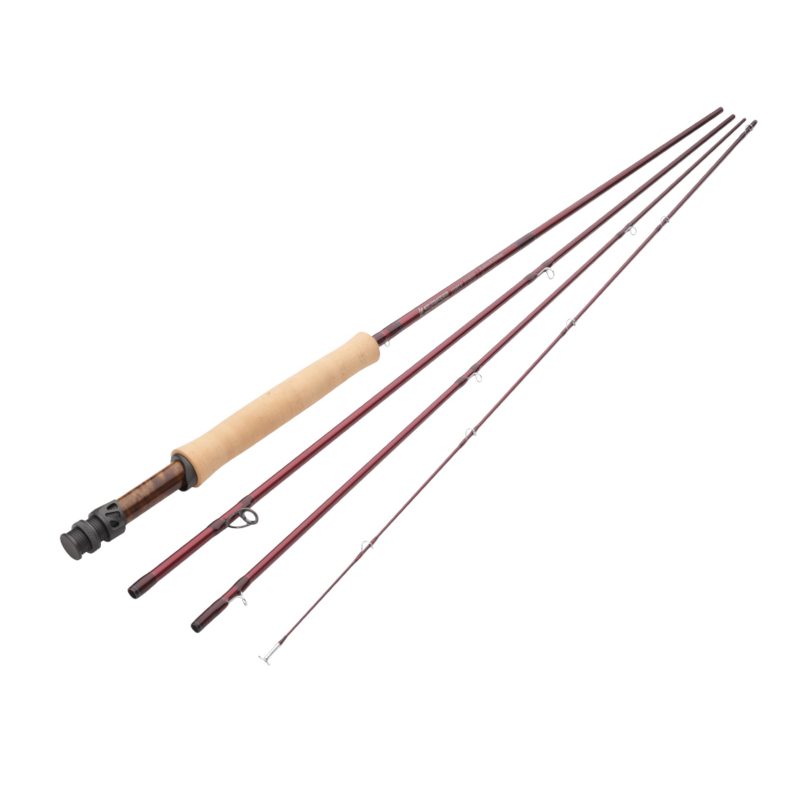
The new Sage R8 Power takes a slightly different approach.
The secret lies within Sage’s R8 material technology. Rather than simply making the blank stiffer, the rod is designed to recover faster while still bending more naturally through the cast.
The result is impressive line speed when needed, particularly into wind, but with a rod that remains surprisingly easy to load and fish throughout a long day.
In short, it offers much of the performance serious anglers want without requiring tournament-level casting skills to unlock it.
3. Multi-Density Control – Smoother Spey Casting
Spey anglers will be familiar with the slight “hinge” effect that can sometimes occur where a sinking tip joins a floating body.
Rio’s new Multi-Density Control system aims to remove that transition completely.
Rather than abrupt changes in density and weight, the system gradually blends one section into the next. This creates a smoother casting stroke, better turnover and improved fly presentation.
Perhaps more importantly, the sinking portion stays concentrated towards the fly itself, helping achieve depth efficiently while making the head easier to lift from the water for the next cast.
For salmon and sea trout anglers, it is a clever refinement of an already effective system.
4. Stronger Cores and Better Durability
Many anglers will remember some of the durability issues experienced with earlier low-stretch fly line cores.
Far Bank openly discussed those challenges and introduced the new Connect Core Plus technology as their solution.
The new core delivers lower stretch while improving shock strength and overall durability. Rio has also redesigned their welded loops to reduce wear and eliminate common failure points.
Whilst not the most glamorous innovation, reliability matters. Few things are more frustrating than a fly line failing long before it should.
5. Marginal Gains That Add Up
One theme ran throughout the entire launch – durability.
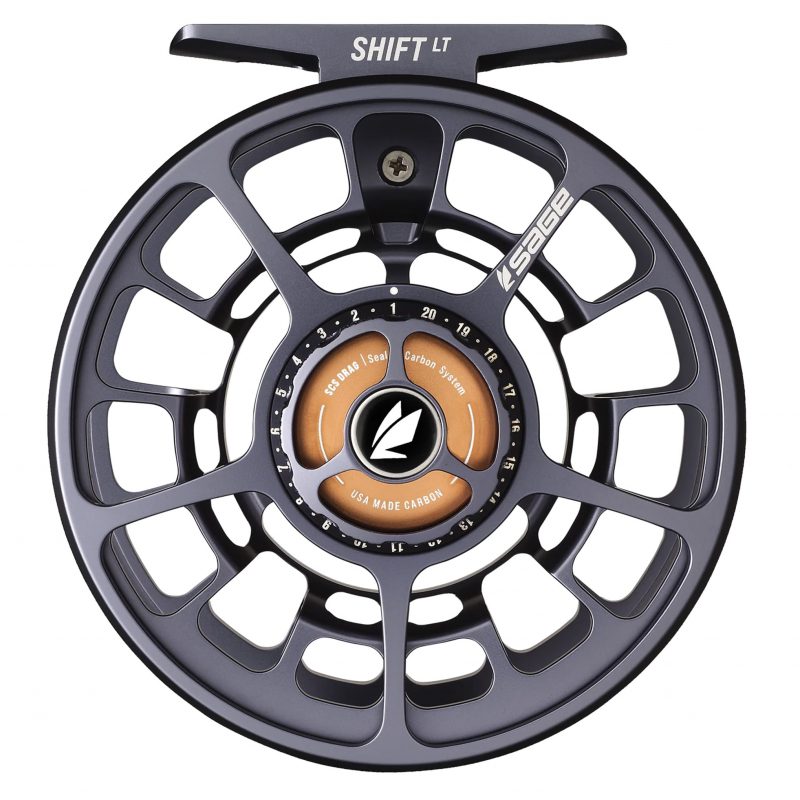
Rio’s SlickCast coating has undergone extensive laboratory testing designed to simulate years of hard use. Meanwhile, Sage’s new Shift and Shift LT reels feature drag materials derived from heavy industrial and aerospace applications.
The goal isn’t simply maximum drag pressure.
Instead, the focus is consistency, smoothness and reliability over thousands of hours of use.
These are the sorts of improvements many anglers may never notice directly, but they certainly appreciate when a reel performs perfectly season after season.
Final Thoughts
The most interesting aspect of the Far Bank 2026 launch wasn’t a single product.
It was the overall direction.
Rather than relying on standard materials and traditional designs, both Sage and Rio are investing heavily in custom engineering to solve specific angling problems. Whether that’s improving sensitivity, increasing durability or making tackle easier to use, the emphasis appears firmly placed on practical performance.
As always, no piece of equipment replaces watercraft, observation and time spent fishing.
But when innovation helps you detect one more take, cast more confidently into a headwind or trust your tackle completely when the fish of the season finally arrives, those small improvements can make a meaningful difference.
And sometimes, that’s all it takes to turn a good day into a memorable one.